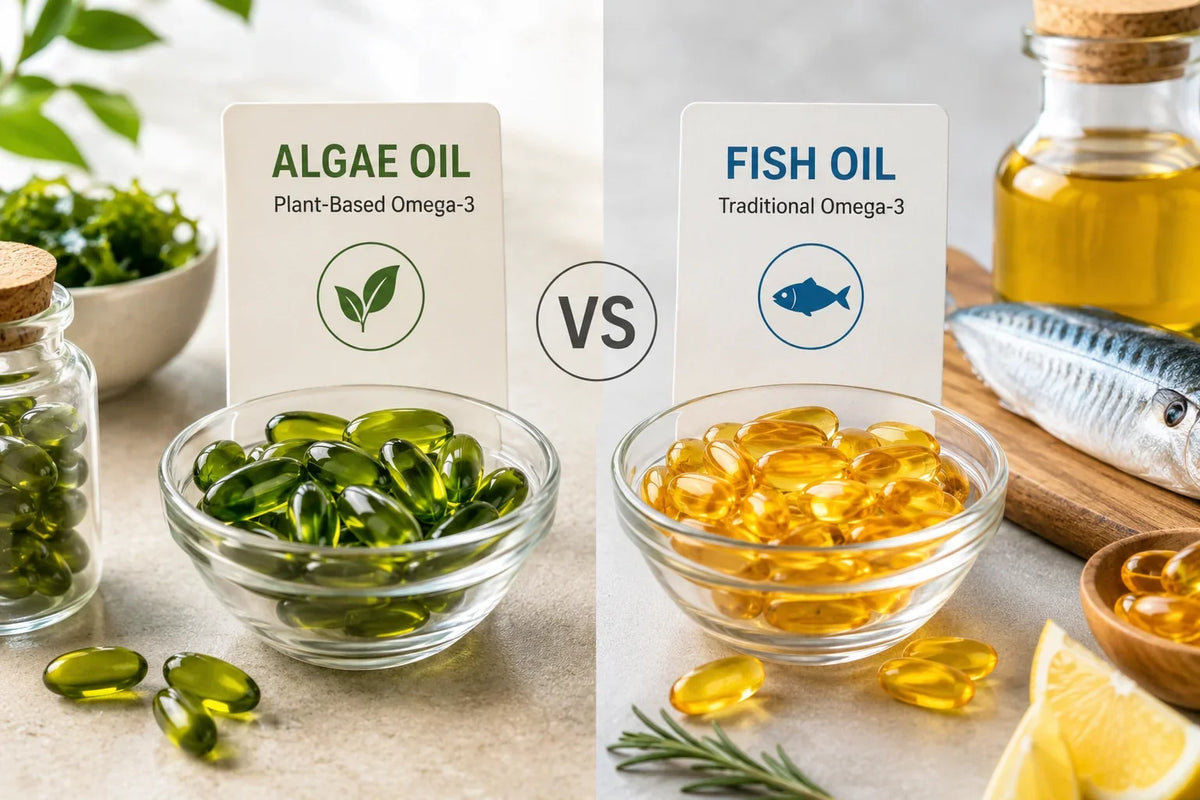
Walk down a UK pharmacy aisle and you'll see both: fish oil capsules (usually cheaper) and algae oil capsules (usually labelled vegan). Both can supply EPA and DHA, the long-chain omega-3s your body uses. The useful question isn't which is "better", but which gives you enough EPA + DHA at a cost and in a form that suits you.
Where the omega-3 comes from
Fish don't make EPA and DHA themselves; they get them from the algae at the bottom of the food chain. Algal oil is grown from microalgae in tanks. Fish oil is extracted from oily fish such as anchovy, sardine and mackerel. The DHA molecule is the same either way.
Head-to-head
| Fish oil | Algae oil | |
|---|---|---|
| EPA + DHA per typical capsule | Often 300–600 mg (standard) to 600–900 mg (concentrated) | Often 250–500 mg; many products are DHA-heavy |
| EPA content | Usually more EPA than DHA | Varies; check the label, some have little EPA |
| Suitable for vegetarians/vegans | No | Yes |
| Fishy aftertaste | Common with cheaper products | Less common |
| Pregnancy | Plain fish oil is fine; avoid cod liver oil (vitamin A) | No vitamin A issue |
| Typical UK cost | Lower per mg | Higher per mg |
How to compare cost properly
Ignore "1000 mg fish oil" on the front of the pack; that's total oil. Turn the pack over and find EPA + DHA per capsule, then work out the cost per 250 mg (the amount used in UK health claims):
cost per 250 mg = (price ÷ capsules) ÷ (EPA + DHA per capsule in mg) × 250
A cheap fish oil with 300 mg EPA + DHA can work out similar to a mid-priced algae oil with 450 mg. Our supplement guide covers freshness, forms and third-party testing.
Pregnancy: why cod liver oil is the exception
The NHS advises pregnant women not to take cod liver oil or any supplement containing vitamin A (retinol), because too much can harm a developing baby. Ordinary fish oil (body oil, not liver oil) and algae oil don't carry this issue. The FSA also limits oily fish to two portions a week in pregnancy. Read cod liver oil in pregnancy and speak to your midwife first.
Sustainability
Algal oil doesn't draw on wild fish stocks. For fish oil, look for MSC certification or Friend of the Sea labels if this matters to you.
Plant foods are not a substitute
Flax, chia and walnuts provide ALA, which converts only weakly to EPA and DHA. Details in our vegan omega-3 guide.
Which one is working for you?
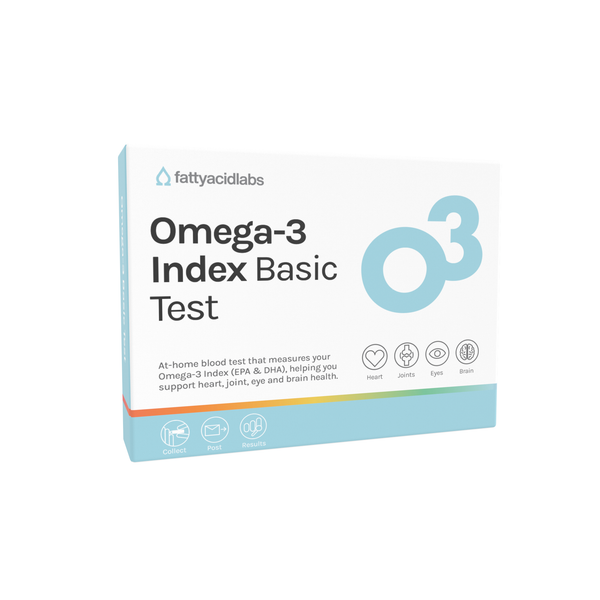
Labels tell you what's in the capsule, not what reaches your cells. A finger-prick Omega-3 Index test (£49.95, free UK delivery both ways, results in 3–5 days) shows your EPA + DHA level; retest three months after switching or changing dose. The calculator suggests a dose for your result.
FAQ
Is algae oil as effective as fish oil? Both supply DHA, and many algae oils supply EPA too. Effectiveness depends on the dose you actually get, which a blood test confirms.
Why is algae oil more expensive? It's produced by fermentation in tanks, which costs more per mg than fish oil extraction.
Can I take algae oil in pregnancy? It avoids the vitamin A issue of cod liver oil; check with your midwife or GP before starting any supplement.
How much should I take? UK/EU health claims use 250 mg EPA + DHA a day as a minimum; your Omega-3 Index shows whether you need more.
General information only; not medical advice.
Sources
- NHS, Vitamins, supplements and nutrition in pregnancy (nhs.uk)
- Food Standards Agency, oily fish advice (food.gov.uk)
- GB Nutrition and Health Claims Register: EPA/DHA and normal heart function (gov.uk)
- British Dietetic Association, Omega-3 food fact sheet (bda.uk.com)
Related: omega-3 and heart health: NHS, NICE and BHF advice.
Not sure your supplement is working? Test, then retest after about 3 months: the Complete Twin Pack covers both.
Know your number.
A simple at-home finger-prick test, posted to your door. Find out where you actually stand on omega-3.
See our tests