DHA is the omega-3 your baby uses most during pregnancy — for the developing brain, eyes and nervous system. A mother's own DHA status is the supply line, and it varies widely between women. Here's why it matters, what the evidence shows, the UK advice on fish in pregnancy, and how to check where you stand.
Why DHA matters in pregnancy
Through pregnancy, DHA is transferred to the baby and laid down rapidly in the developing brain and retina. Because the baby draws on the mother's stores, your omega-3 status during pregnancy is biologically important — and most women have never measured theirs. DHA is the structural omega-3 (the difference from EPA is explained in EPA vs DHA).
What the evidence shows
Omega-3 in pregnancy is one of the most-studied areas in maternal nutrition. A large Cochrane systematic review of randomised trials (Middleton et al., 2018) examined omega-3 supplementation in pregnancy and the timing of birth, and the wider literature continues to inform guidance. A consistent theme is that a woman's baseline omega-3 status is what matters — which is exactly why measuring it, rather than guessing, is useful. As with all of this, it's information to discuss with your midwife, not a promise of any particular outcome.
UK advice on fish in pregnancy
NHS guidance for pregnancy is specific, and worth getting right:
- Aim for two portions of fish a week, one of them oily (salmon, mackerel, sardines) — but no more than two portions of oily fish a week.
- Avoid shark, swordfish and marlin entirely, and limit tuna, because of mercury.
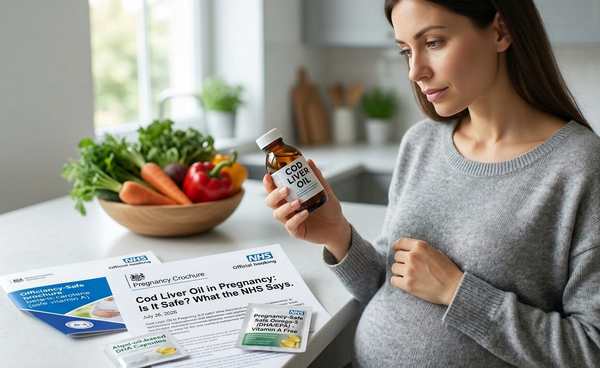
- Avoid fish-liver oils such as cod liver oil in pregnancy — they're high in vitamin A (retinol), too much of which can harm a developing baby.
If you don't eat fish
Algae-based omega-3 supplements provide DHA directly and are a practical, fish-free option in pregnancy for anyone who is vegan, vegetarian or simply avoiding fish. The DHA your body uses is the same molecule whether it came from fish or microalgae — see plant-based and vegan omega-3 for more.
Know your status
The value of testing is replacing guesswork with your actual number, so any decision about diet or supplements — made together with your midwife or GP — is based on where you really stand. Our Prenatal Omega-3 Test measures DHA on a pregnancy-tuned scale from a simple finger-prick, and can be repeated each trimester. There's more on the pregnancy page.
Frequently asked questions
Why is DHA important in pregnancy?
It's the omega-3 most concentrated in the baby's developing brain, eyes and nervous system, and the baby draws on the mother's stores.
Can I take cod liver oil in pregnancy?
No — NHS advice is to avoid fish-liver oils in pregnancy because of their vitamin A (retinol) content. Choose a fish-body-oil or algae DHA instead, and check with your midwife.
How much oily fish can I eat when pregnant?
Up to two portions of oily fish a week, and avoid shark, swordfish and marlin while limiting tuna.
I'm vegan — how do I get DHA?
Algae-based DHA supplements provide it directly, without fish. Discuss any supplement with your midwife.
Check your prenatal omega-3 level at home.
Prenatal Omega-3 Test →References
- Middleton P, Gomersall JC, Gould JF, et al. Omega-3 fatty acid addition during pregnancy. Cochrane Database of Systematic Reviews. 2018;11:CD003402.
- NHS — advice on fish and foods to avoid in pregnancy (including oily fish limits and fish-liver oil/vitamin A).
- Scientific Advisory Committee on Nutrition (SACN). Advice on fish consumption. 2004.
Information only. This is not a diagnostic test and does not treat, prevent or diagnose any condition. Always discuss your results, and any changes to diet, supplements or care, with your midwife, GP or obstetrician.
Know your number.
A simple at-home finger-prick test, posted to your door. Find out where you actually stand on omega-3.
See our tests