If you've searched for an omega-3 blood test, you've probably wondered whether the NHS offers it or whether your GP can add it to a blood test. Here's the plain-English answer, why it works this way, and what it costs to check your level at home.
Why isn't the Omega-3 Index available on the NHS?
The Omega-3 Index — EPA + DHA measured as a percentage of your red blood cell fatty acids — simply isn't part of standard NHS pathology. A routine GP-ordered blood test looks at things like cholesterol, blood glucose, iron and kidney function, but none of those panels measure your omega-3 status. Measuring EPA and DHA needs a laboratory specifically set up for fatty acid analysis, which is why it isn't offered through general practice or ordered as a standard NHS test.
Do I need a GP referral?
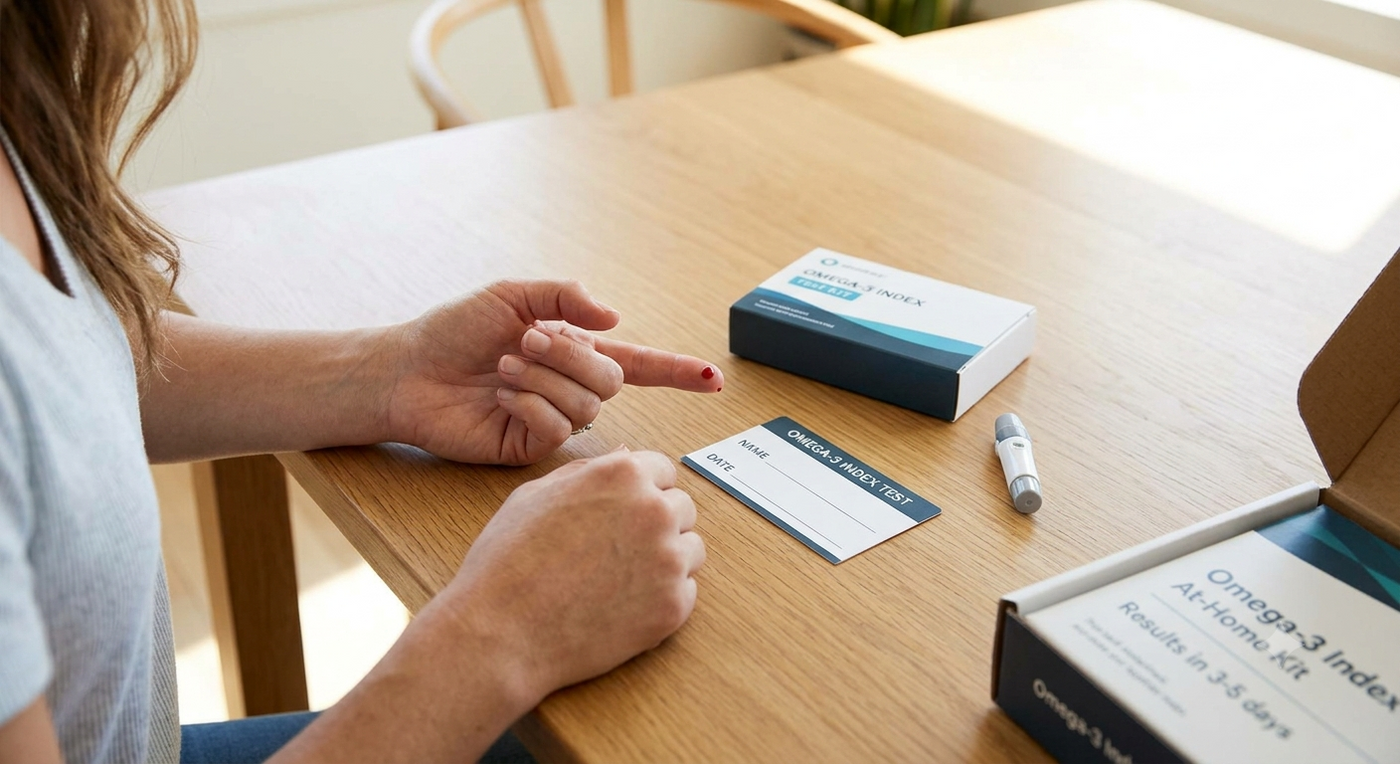
No. Omega-3 Index testing is direct-to-consumer — no referral required. You order online, collect a finger-prick blood sample at home, and post it to the lab. Many people share the report with their GP, nutritionist or midwife afterwards (it's formatted like a pathology report), but that's optional.
How much does an Omega-3 Index test cost in the UK?
Prices vary by provider and by how much detail you want. Our at-home tests are analysed by GC-FID in an accredited laboratory, with results in 3–5 days of your sample arriving:
| Test | What it measures | Price |
|---|---|---|
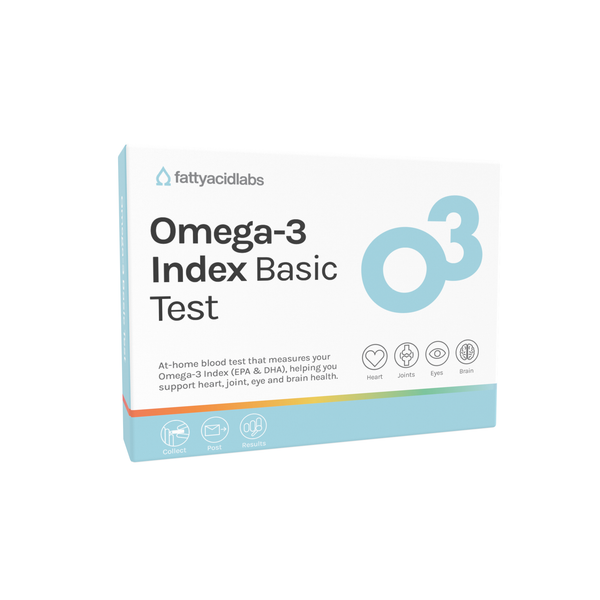
| Omega-3 Index Basic | Your Omega-3 Index (EPA + DHA) | £49.95 |
| Omega-3 Plus Ratios | Index + omega-6:3 and AA:EPA ratios | £69.95 |
| Omega-3 Complete | Full 24-fatty-acid profile | £79.95 |
| Prenatal Omega-3 | Omega-3 DHA on a pregnancy-tuned scale | £49.95 |
Shipping is free across the UK, and there's no consultation fee — so the price you see is the full cost.
Why bother if the NHS doesn't test it?
Because most of us are low. UK guidance from SACN and the NHS is to eat at least two portions of fish a week, one of them oily — yet national surveys show most people fall well short, which is why the average British omega-3 index sits below the 8–12% range that published research links to better heart and brain outcomes. You can't feel your level, and it reflects the past 3–4 months of intake, so the only way to know whether your diet or supplement is actually working is to measure it.
How to check your Omega-3 Index without the NHS
- Order an at-home kit online — choose the test that matches what you want to learn.
- Collect at home — one finger-prick onto the dried blood spot card. No fasting, no clinic.
- Post it back in the prepaid envelope and get your report in 3–5 days.
Know your Omega-3 Index — no GP referral needed
At-home finger-prick test, analysed by GC-FID. Results in 3–5 days, free UK delivery.
See our tests — from £49.95 →Common questions
Can I get an Omega-3 Index test on the NHS?
No. The Omega-3 Index isn't part of routine NHS blood panels and isn't ordered as a standard GP blood test.
Can my GP add an omega-3 test to a blood test?
Not as standard — general-practice pathology doesn't include EPA + DHA. You'd use a private at-home or clinic test instead.
Do I need a referral for an omega-3 blood test?
No. At-home omega-3 index tests are direct-to-consumer and don't require a GP referral.
How much does an Omega-3 Index test cost in the UK?
Typically from about £49.95 for a basic Omega-3 Index up to around £79.95 for a full 24-fatty-acid profile, depending on the provider and test.
References
- Scientific Advisory Committee on Nutrition (SACN). Advice on fish consumption: benefits and risks. UK Government / NHS.
- Harris WS, von Schacky C. The Omega-3 Index: a new risk factor for death from coronary heart disease? Preventive Medicine. 2004;39(1):212–220.
- Stark KD, et al. Global survey of the omega-3 fatty acids in healthy adults. Progress in Lipid Research. 2016;63:132–152.
This article is general information, not medical advice, and does not diagnose, treat or prevent any condition. Discuss testing or supplement decisions with your GP, especially in pregnancy.
See how private UK providers compare in Omega-3 Index tests in the UK compared.
Know your number.
A simple at-home finger-prick test, posted to your door. Find out where you actually stand on omega-3.
See our tests